
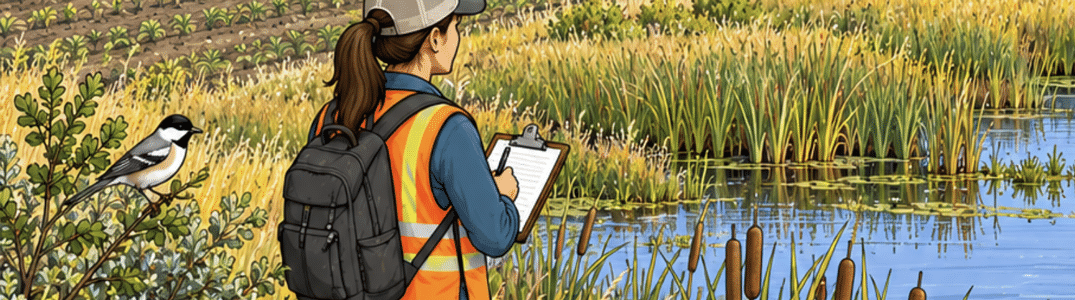
Southern Alberta’s agricultural landscape supports a variety of wildlife, including ring-necked pheasants, grey partridge and other bird species that depend on farmland for food, nesting cover and protection from predators. These birds have adapted to life alongside modern agriculture, but changes in farming practices raise important questions about the long-term health of the habitats that sustain them.
One concern receiving increasing scientific attention is the use of neonicotinoids (neonics), a class of insecticides widely used in agriculture.
Although these products help farmers protect crops from insect pests, research has raised concerns about their potential effects on wild birds, both through direct exposure and by reducing the insects that form an important part of the food web.
What are neonics, and how are they used?
Neonics are systemic insecticides, meaning that plants can absorb them and distribute them through their tissues. Three important neonicotinoids approved for agricultural use in Canada are imidacloprid, clothianidin and thiamethoxam. They are used in various agricultural applications, including certain seed treatments, to protect crops against insect pests. Their use and permitted applications depend on the product and its registration. Health Canada provides information on these products and their environmental assessments.
Seed treatments are particularly relevant to wildlife because treated seeds may be exposed during planting if they spill or remain accessible on the soil surface.
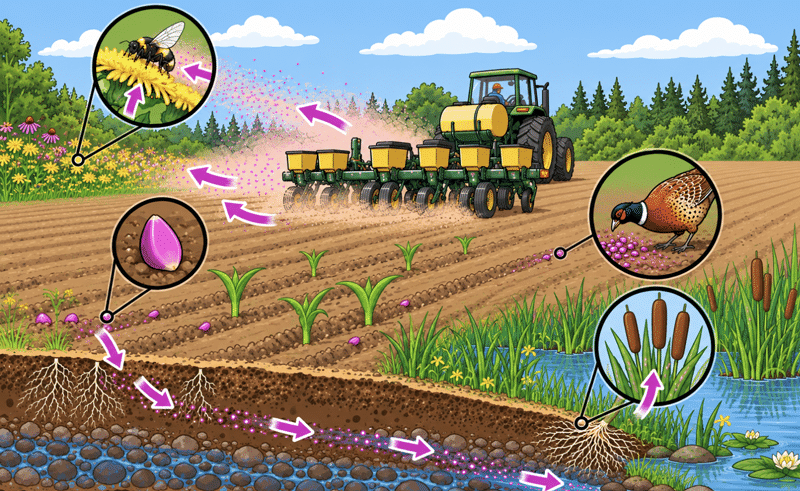
Pheasants feed on seeds and grains, making it reasonable to investigate whether they could encounter treated seed under local agricultural conditions.
Neonics can also enter soil and water. Depending on the chemical, soil conditions and weather, residues may persist and move through the environment. This creates additional questions about exposure among insects and other organisms that live in agricultural fields, wetlands, irrigation channels and waterways.
Direct exposure is only part of the concern.
The potential effects of neonicotinoids on insects may be equally important to the conservation of upland gamebirds. Insects are an important food source for growing chicks. During their early weeks, young gamebirds need protein-rich food to support rapid growth and development.
A chick moving through a field margin or grassy nesting area may feed on beetles, grasshoppers, caterpillars, ants and other small invertebrates. The availability of this food can influence whether the chick grows successfully and survives its first weeks of life.
The concern is not limited to insects found directly in a treated field. Research and environmental assessments have identified risks to aquatic invertebrates as well. In southern Alberta, where agricultural land intersects with irrigation systems, wetlands, creeks and rivers, investigating pesticide movement and insect health is important.
Neonics should be considered a potential factor within a much larger picture of agricultural wildlife conservation.
The key question is whether their use results in exposure levels or ecological changes that affect local gamebird populations. Research is needed in southern Alberta to help answer several practical questions including :
How widespread is exposure?
What is happening to insects?
Are gamebirds being exposed?
Does exposure affect reproduction or survival?
Which farming practices reduce risk?
Research is being done, including this research project at the University of Saskatchewan showing how the world’s most widely used insecticides could be partly responsible for a dramatic decline in songbird populations. Read more…
We are also aware of the Minnesota Department of Natural Resources, who is gathering baseline information on the prevalence of neonics in wild pheasants and their associated habitat components. Read more…
We need to connect what scientists are learning with what is actually happening in southern Alberta.
By investigating pesticide residues, insect populations and gamebird health together, we can move beyond assumptions and develop a clearer picture of the risks.
Calling All Researchers!
Farmers and conservationists share an interest in healthy soils, functioning ecosystems and productive landscapes. Better information about neonics exposure and insect availability could help identify the impact to upland gamebirds and where Pheasants Forever and work to help make a difference.
We are calling on researchers to have a closer look and let us know how we can help.
Healthy game bird populations begin with healthy, connected habitats—and protecting those habitats means understanding every factor that may affect them.